PERFORMANCE IMPROVEMENT
Dr. Gerardo Moreno Has Built a Varied Practice Serving Minorities in LA
As part of ABFM's celebration of Minority Health Month, we spoke with ABFM Board Chair-Elect Dr. Gerardo Moreno, who practices at Mid-Valley Comprehensive Health Center in northern Los Angeles.
April 21, 2023
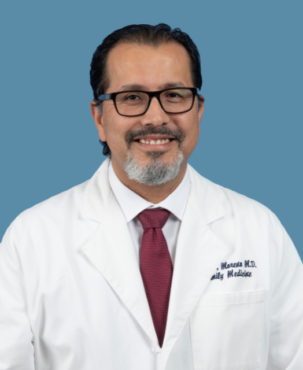
Gerardo Moreno, MD, MSHS
As part of ABFM’s celebration of Minority Health Month, we spoke with ABFM Board Chair-Elect Dr. Gerardo Moreno, who practices at Mid-Valley Comprehensive Health Center in northern Los Angeles.
Additionally, Dr. Moreno is a professor at UCLA’s David Geffen School of Medicine where he serves as the Chair of the Department of Family Medicine and the Director for UCLA’s Program in Medical Education (PRIME)-Leadership and Advocacy, a dual degree MC/master’s program which trains medical students to be leaders and advocates for populations that have been historically under-resourced and underserved.
ABFM is delighted to share this interview with Dr. Moreno and explore his work to improve the health of people from racial and ethnic minority groups in Los Angeles.
What do you enjoy about practicing family medicine?
I enjoy family medicine for its broad scope. Many of my patients have been a part of my practice for decades. LA County is a great place to practice because I enjoy the challenge of addressing each patient’s medical needs and the challenges they see in everyday life. It’s hard enough for those of us who speak English to keep track of our health care. It becomes much more difficult for anyone who speaks a non-English language or has literacy/numeracy issues. Making sure all patients can navigate the system isn’t just a patient issue. It’s a health care system issue.
What led you to practice at the Mid-Valley Comprehensive Care Center?
I actually knew of the Mid-Valley Center when I was a medical student, and I rotated there for my family medicine clerkship. I met some great family physicians who provided excellent care, and that experience is part of the reason I chose family medicine as my specialty. I’ve now practiced in that same building since 2007.
Tell me about your patient population.
My patient population is about 80% Hispanic and about 60% monolingual Spanish speakers. Many of them have been in the United States for a long time. Others are more recent immigrants.
I enjoy helping them navigate through the health system, through social stressors and complicated life decisions. When you care for patients over a long period of time, it builds this incredible trust between the patients and our team. The patients appreciate what we do for them, and that’s really gratifying.
What recent challenges have your patients faced?
At the beginning of the pandemic, I thought my practice was going to embrace telehealth and remote visits. But, we discovered that patients appreciate the continuity of our practice. Many felt really isolated and disconnected at the start of COVID.
Additionally, many of my patients live in multi-generational households: grandparents, parents, their children. Many worked in service jobs that couldn’t be done remotely and limited the ability to isolate. That made the whole experience hard on them, and they were eager to come back and see us in person.
The other difficult piece has been misinformation. Getting the right information to our patients, in their language, was a bit challenging. It is so gratifying to clear up questions patients have about their safety and validate the science that we know.
You’re committed to training the next generation of physicians, both by having residents who shadow you in practice and teaching medical students at UCLA. Could you talk about the importance of that shared experience?
It’s critical for family physicians to be involved in mentoring. The sooner we imprint our values and our practice philosophy on the next generation, the sooner they can understand what true primary care is about.
"Studies have shown that medical students from rural areas are more likely to go back and work in those same rural areas. We must provide teaching opportunities for those students."
Did you have a mentor that affected your journey into family medicine?
I did. I grew up in rural California in an agricultural farmworker community. During a summer program in college, I was paired with a family physician. Spending time with him changed my life and my career. I observed the deep connection he had with his patients, and that was exactly what I needed. If I wasn’t exposed to family medicine early on, maybe I would have done something else.
Your mentoring role extends to the PRIME-Leadership and Advocacy program where you serve as director. Could you explain the goal of that program?
Absolutely. Physicians accepted into the PRIME program go on to graduate with an MD as well as a master’s degree of their choice. It could be in public health, public policy, or an MBA. The idea is that we’re training the next generation of physicians in California, not only to be excellent clinicians, but also to be sensitive to the patient’s social needs.
For example, if a patient has food insecurity, the physician should understand how that will impact their diabetes and their blood pressure. If somebody has housing insecurity, the physician must understand that getting the patient shelter will improve chronic skin conditions and mental health, just to name a few.
The idea is that physicians in this program will use their leadership skills to address issues for the people who live in our communities in California that have been historically under-resourced and marginalized. This is a five-year program, and there are about 100 students enrolled in the program total.
What health care goals are you working towards?
I’m excited about continuing to work with my patients. Because there was such a demand for care after the COVID isolation period, we’re still making sure all of our established patients are able to come and renew their continuity of care. I’m also excited that the infrastructure of health care is becoming a bit more reflective. We’re now taking into consideration people’s day-to-day challenges and becoming more aware of how this impacts their medical care.
Thank you, Dr. Gerardo Moreno, for providing this valuable insight into your patient population and advocating for mentorship of young physicians.